How Much Do Custom Closet Systems Actually Cost?
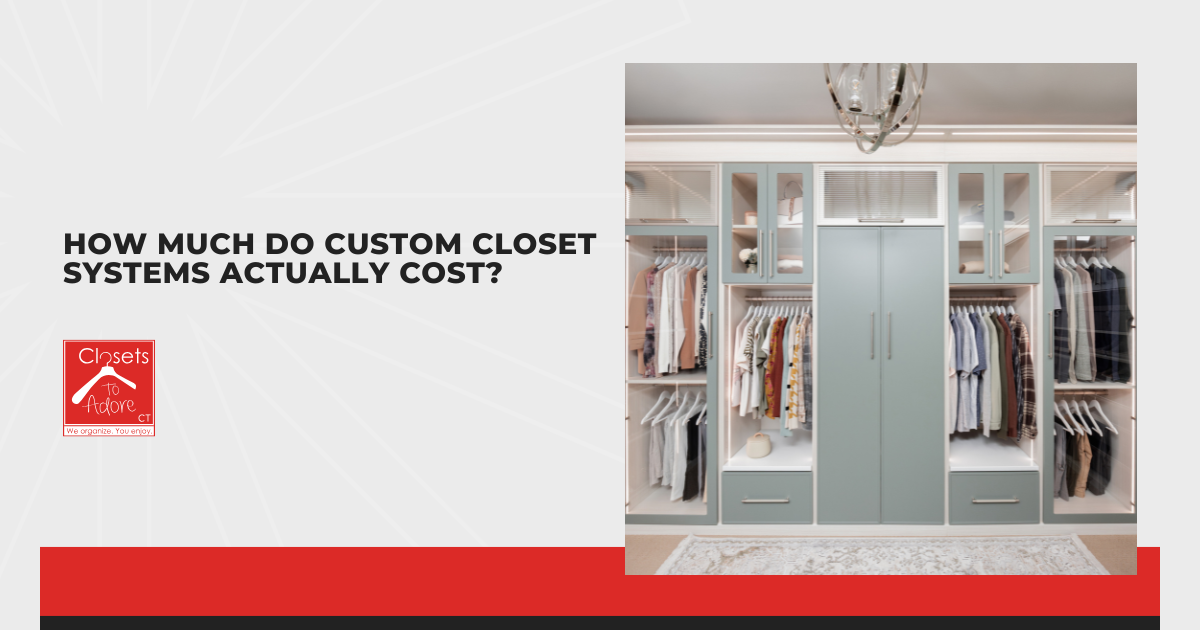
Custom closet systems have a reputation for being expensive, and depending on who you ask, you'll get a price that ranges from a few hundred dollars to well over ten thousand. That gap isn't random, and it isn't just markup. The cost is shaped by a handful of very specific factors, and understanding them is what separates a buyer who gets great value from one who either overspends or ends up disappointed with what they paid for.
Most people go into the process with a vague budget and no real framework for evaluating whether a quote is fair. A number that sounds high might be completely reasonable for what's included, and a number that sounds low might be a warning sign worth paying attention to. Knowing what drives the cost before you start talking to anyone puts you in a much stronger position to make a decision you'll feel good about long after the installation is done.
Here are the key factors that determine what you'll pay for a custom closet system:
- Size and scope
- Materials and finishes
- Hardware quality
- Design complexity and layout
- Professional installation vs. DIY
- Add-ons and upgrades
Let’s work through each point so you’ll have a much clearer picture of what your custom closet system should actually cost.
Size and Scope
The size of your closet is the most straightforward cost driver, and it's the first thing any designer or installer will ask about. A small reach-in closet requires far less material, fewer components, and less installation time than a large walk-in. Square footage alone doesn't tell the whole story, though, as the number of walls being outfitted and the height of the ceiling both factor into how much material is needed. A walk-in closet with three full walls of storage will naturally cost more than one where only a single wall is being addressed.
Scope goes beyond just the physical dimensions of the space. A closet that needs a straightforward single-wall layout with basic hanging and shelving is a very different project from one that requires a full wraparound system with dedicated sections for shoes, accessories, folded clothing, and hanging items of different lengths. The more the design needs to accomplish, the more components, design time, and installation labor go into it. Getting clear on the full scope of what you want before you start getting quotes makes it much easier to compare proposals accurately.
Most people don't realize how much scope affects the final number until they're sitting across from a designer. What starts as a simple closet refresh can quickly become a more involved project once all the functional requirements are laid out on paper. Having a clear sense of what you actually need from the space before that first conversation is what keeps the scope, and the cost, from getting away from you. In my view, the buyers who feel most confident about their investment are the ones who came prepared with a clear picture of what they wanted before anyone started designing.
Materials and Finishes
Few decisions affect the overall cost of a custom closet system more than the materials you choose. Budget-friendly options like melamine and laminate keep costs down without sacrificing too much in terms of appearance, making them a practical choice for homeowners who want a clean, finished look without a premium price tag. Solid wood and plywood command a higher price but deliver a level of quality and durability that less expensive materials can't match. The finish applied to the surface, whether painted, veneered, or high-gloss lacquered, adds another layer of cost that varies significantly depending on the look you're after.
Hardware finishes fall into this category too and are worth factoring into your budget early. Brushed nickel, matte black, and polished chrome all carry different price points, and the finish you choose needs to be consistent across handles, hinges, and drawer pulls throughout the entire system. Deciding on a finish direction early prevents costly changes later in the process. A cohesive hardware finish across the whole system also makes a significant difference in how polished the final result looks.
Melamine and laminate are easy to clean and hold up well under everyday use, while solid wood requires more care over time. Matching the material to how the closet will actually be used is worth thinking through before committing to anything. A higher-end material in a low-traffic closet rarely delivers the return that the same investment would in a primary bedroom or a shared space.
Hardware Quality
Most people don't think much about drawer slides and hinges until they start failing, and by then the closet is already a source of daily frustration. Components like drawer slides, hinges, handles, and pull-out mechanisms get used multiple times a day, and the quality behind them has a direct impact on how the closet feels to use over time. Budget hardware loosens, sticks, and wears out faster than the cabinet itself. The gap in daily experience between a closet with quality hardware and one without is noticeable from the very first use.
Full-extension ball-bearing drawer slides allow complete access to drawer contents and hold up far better under regular use than basic roller alternatives. Soft-close hinges and drawer mechanisms reduce wear and tear on the cabinet structure over time, and once you've experienced them, basic hinges feel like a step backward. Handle and pull quality matters too, as hollow or lightweight hardware loosens quickly in high-use environments. Asking specifically about the hardware brands and specifications included in a quote is a reasonable question before signing anything.
The price difference between basic and premium hardware is often smaller than people expect, especially when spread across the total cost of the project. Prioritizing hardware quality is one of the most cost-effective decisions you can make within a fixed budget. An upgrade that costs a few hundred dollars more upfront can extend the functional life of the entire system by years. Knowing what's included in a quote and what's been left out is what keeps you from being surprised after installation.
Design Complexity and Layout
A single-wall closet with basic hanging and shelving is about as straightforward as a custom closet system gets, and the price reflects that simplicity. Add a second wall, introduce specialized sections for shoes, accessories, and folded clothing, and incorporate features like pull-out drawers, angled shelving, and dedicated jewelry storage, and the complexity, and the cost, rises accordingly. Every additional feature requires more design time, more components, and more installation labor, all of which add up in ways that aren't always obvious from the outside. Understanding how design decisions translate into dollars before you sit down with a designer is what keeps the process from feeling like a series of unexpected surprises.
The shape of your closet also plays a role in how complex, and how costly, the design becomes. Awkward corners, angled ceilings, irregular wall configurations, and non-standard dimensions all require custom solutions that take more time and skill to execute than a straightforward rectangular space. A designer who can work creatively within those constraints is worth the investment, but it's worth knowing upfront that unusual spaces typically cost more to outfit well.
Island units, built-in seating, integrated lighting, and display sections for bags or shoes are all features that add meaningful cost to a custom closet system. Each one requires additional design consideration, specialized components, and more installation time than a standard hanging and shelving configuration. Before committing to a feature-heavy design, it's worth ranking which elements matter most to you and which ones you'd be comfortable leaving for a future phase. A phased approach to adding complexity lets you stay within budget without permanently giving up on the features you want most.
Professional Installation vs. DIY
Deciding between professional installation and a DIY approach is one of the most significant cost variables in any custom closet project. Professional installation adds to the upfront cost, but it brings a level of precision and accountability that's difficult to replicate on your own. From what I've seen working with clients on their closets, the ones who attempt a DIY installation often underestimate the time, skill, and tools required to get the result they're picturing. A professionally installed system almost always delivers a noticeably better outcome than the same components installed without expert hands.
Professional installers assess the wall structure, account for uneven floors and out-of-square walls, and make adjustments in real time that a first-time DIY installer wouldn't know to look for. Errors made during installation are often more expensive to correct than professional installation would have cost in the first place. A quote that includes installation might feel higher upfront, but it represents better value when you factor in the risk of getting it wrong. Precision during installation is what makes the difference between a closet that looks custom and one that just looks close.
Modular systems from retailers offer a middle ground between fully custom and fully DIY, with components designed to be assembled without professional help. The savings can be meaningful, but so can the limitations, as modular systems rarely offer the same level of customization or fit as a professionally designed system. For simpler closets with straightforward layouts, DIY is a legitimate option worth considering. For anything more complex, professional installation is almost always the smarter investment.
Add-Ons and Upgrades
The base price of a custom closet system covers the essentials, but the features that make a closet truly functional and enjoyable to use often come as upgrades. Integrated lighting, pull-out accessories, valet rods, motorized components, and specialty storage for shoes, jewelry, and bags are all examples of add-ons that enhance the daily experience of the closet without being part of a standard configuration. Each one adds to the overall cost in a way that's worth understanding before you sit down with a designer. Knowing which upgrades matter most to you upfront is what keeps the design conversation focused and the budget from expanding beyond what you're comfortable with.
Lighting is one of the most impactful upgrades available and also one of the most underrated. A well-lit closet makes every item visible without straining, speeds up the getting-ready process, and elevates the overall feel of the space in a way that no other upgrade quite replicates. LED strip lighting, motion-activated fixtures, and integrated cabinet lighting are all options worth discussing during the design phase. The cost of adding lighting during installation is almost always lower than retrofitting it after the fact.
Pull-out accessories like tie racks, belt hooks, and valet rods add meaningful functionality without dramatically increasing the overall budget. Specialty shoe storage, jewelry drawers, and display shelving for bags are worth prioritizing if those categories represent a significant portion of your wardrobe. Not every upgrade is worth the cost for every person, so focus on the ones that solve a real problem in your daily routine.
Conclusion
Pricing for custom closet systems can feel opaque until you understand what's actually driving the numbers. Size, materials, hardware, design complexity, installation, and add-ons all contribute to the final cost in ways that are entirely predictable once you know what to look for. Going into the process informed means you'll know exactly what you're paying for, what's worth prioritizing, and where you can make smart trade-offs without compromising on what matters most. A quote that once felt overwhelming starts making a lot more sense once you know what's behind every line item.
Recent Posts